Every Pokémon card follows exact dimensions and an exact size, but many people who handle cards every day never notice the actual measurements.
Whether you are holding a deck in your hand, using your fingers for shuffling, sliding cards across a table, or creating digital canvas setups, knowing the standard card size, width, height, thickness and corner radius helps you choose the right canvas, setup, and sleeve sizes.
This guide puts everything in one place, including standard dimensions in inches, cm, mm, and pixels with the numbers 2.5 inches, 3.5 inches, 63.5 mm, 88.9 mm, 0.125 inches, 0.30 mm, and 0.32 mm. You can also compare the standard card with jumbo card variants, identify a fake card, and spot counterfeits.
For collectors, a growing collection or multiple collections need correct size accessories, protection products, protecting cards, grading, and storing. Proper binders, rigid holders, and avoiding tight holders help prevent slide, scratched, edges, and corners damage while keeping valuable pulls and trading cards safe.
Quick Pokémon Card Size Chart
| Measurement | Inches (in) | Centimeters (cm) | Millimeters (mm) |
| Width | 2.5 in | 6.35 cm | 63.5 mm |
| Height | 3.5 in | 8.89 cm | 88.9 mm |
| Corner Radius | 0.125 in | 0.3175 cm | 3.175 mm |
| Standard Thickness | ~0.012 in | ~0.03 cm | 0.30 to 0.32 mm |
| Holo/Foil Thickness | ~0.014 in | ~0.035 cm | up to 0.35 mm |
| Authentic Card Weight | N/A | N/A | 1.70 to 1.80 g |
| Aspect Ratio | 5:7 (1:1.4) | N/A | N/A |
Exact Pokémon Card Dimensions: Complete Size Breakdown
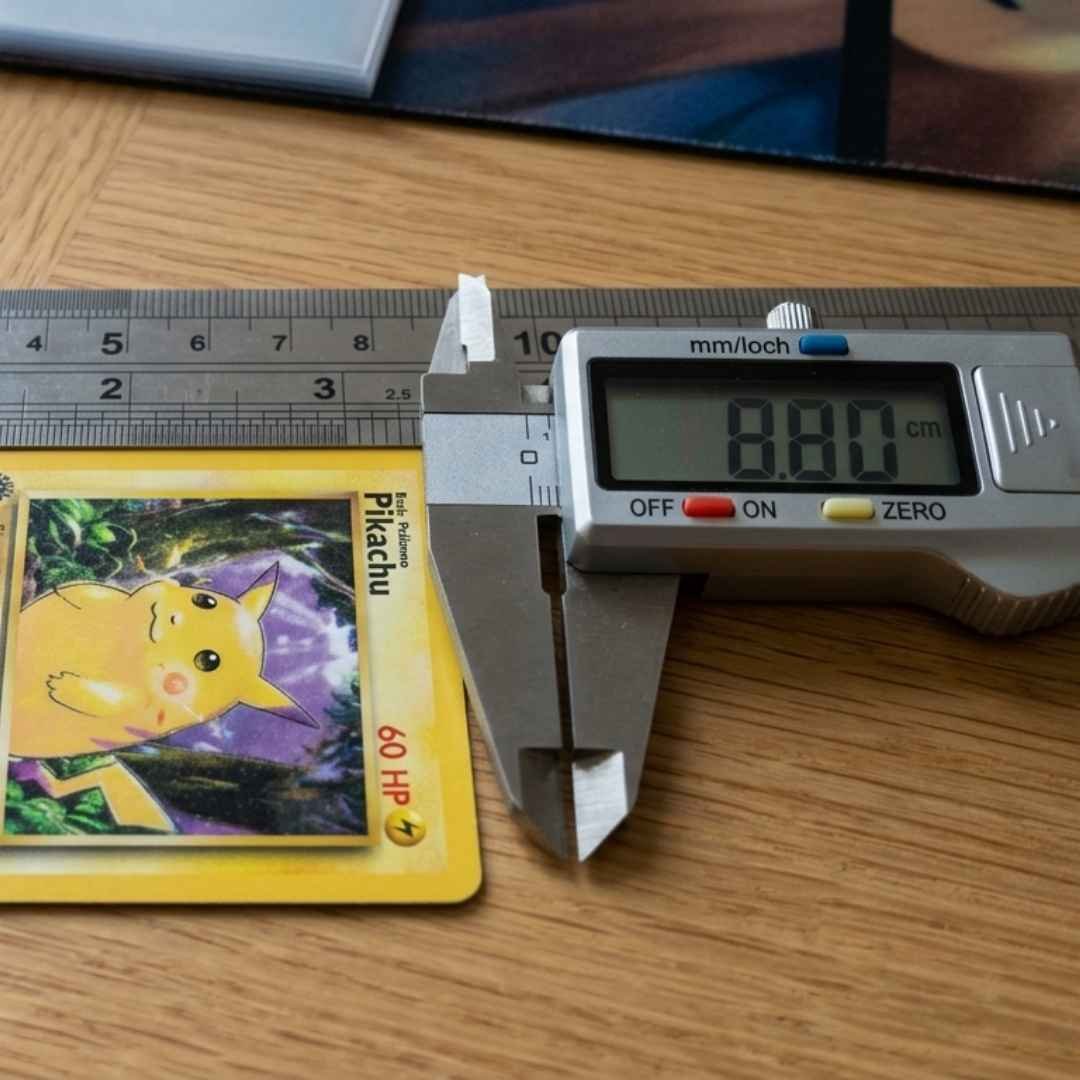
A standard Pokémon card has kept the same dimensions since the game launched in 1996, making the TCG highly collector-friendly.The exact size is 2.5 inches wide and 3.5 inches tall, which equals 63.5 mm by 88.9 mm in millimeters.
Every printed card measures to this standard, so a sleeve bought in 1999 still fits a card printed in 2025. This consistency keeps the measurements the same across all releases, ensuring the official numbers remain accurate for players and collectors.
These measurements are important for every collector because grading companies like PSA and BGS use them during grading and centering analysis. Even a 0.3 mm variance raises flags during analysis, supporting professional authentication and counterfeit detection.
The corner radius of 0.125 inches, also called 1/8 inch, creates a smooth curve on the corners, which prevents fraying, improves shuffling, and supports gameplay longevity. Accurate centering and size detection help confirm that every card meets the official standard.
Every standard card is made with careful manufacturing tolerances, usually between ±0.2 mm and ±0.3 mm. These limits are much tighter than most people realize, allowing millions of authentic cards from different print runs and different countries to fit perfectly into the same sleeve.
The thickness of standard cards normally stays between 0.30 mm and 0.32 mm, making storage, grading, and protection much more consistent for collectors who compare cards from different releases.
The internal tri-layer construction uses white paper with a dark graphite core, giving every authentic card its characteristic opacity, stiffness, and proper weight. A typical standard card weighs around 1.70 grams to 1.80 grams, while holographic and full-art foil cards include an extra foil layer that can increase the thickness to around 0.35 mm.
These physical details also play an important role in the fake detection section, where every measurement and number helps identify genuine cards from counterfeits.
Quick Overview Pokemon Card Dimensions in CM, MM, and Inches
| Unit | Width | Height |
| Inches | 2.5 in | 3.5 in |
| Centimeters | 6.35 cm | 8.89 cm |
| Millimeters | 63.5 mm | 88.9 mm |
| Feet | 0.208 ft | 0.292 ft |
Pokémon cards dimensions are commonly checked in mm, where professional graders like PSA and BGS evaluate centering by measuring the card in millimeters. Even 1 mm on one side can appear off-center, affects the final grade, and may leave the card rejected. I have seen small measurement differences make a noticeable impact during grading.
The standard size is 6.35 × 8.89 cm. This measurement helps European manufacturers with sleeve production and every factory produce a wide enough binder pocket and binder pockets for the best fit, so the card does not shift and suffer edge wear.
Quick Overview Pokemon Card Dimensions in Pixels and Digital Use
For custom card art, printing, proxies, or a digital workspace, pixel dimensions matter as much as inches. Many dimension guides miss this section, but these measurements help create correctly sized Pokémon cards.
Pokémon Card Pixel Dimensions by Resolution
| Print Resolution | Pixel Dimensions (W × H) | Common Purpose |
| 72 DPI | 180 × 252 px | Web graphics, online previews, and thumbnails |
| 150 DPI | 375 × 525 px | Sample prints, design drafts, and mockups |
| 300 DPI | 750 × 1050 px | High-quality printing and professional card designs |
| 600 DPI | 1500 × 2100 px | Ultra-high-resolution printing and archival-quality reproductions |
For card printing, use 300 DPI as the minimum DPI to keep image quality sharp and match the exact size and card size of custom cards. In my experience, printing through any print service with 72 DPI keeps the image the right size but creates a blurry image and reduces print quality.
Print Bleed Size
When preparing artwork for printing, always think about the print bleed before focusing on the actual dimensions because even Commercial printers cannot cut with perfect precision every time. I always leave an extra margin so the artwork can extend beyond the border and edge, which helps prevent white unprinted edges from appearing on the final card after the trim. For Pokémon cards, the standard bleed is 0.125 inches on all four sides, creating a full canvas size of 2.75 inches by 3.75 inches. At 300 DPI, this equals 825 pixels by 1125 pixels, giving enough room for clean graphics, proper layout, and accurate artwork placement inside the printable area. I also keep all important text inside the inner safe zone, which measures 2.25 inches by 3.25 inches, so nothing gets cut off during production. Following the correct measurement, size, canvas, dimensions, resolution, pixels, safe area, and card design guidelines helps every card look professional from edge to edge.
Procreate Pokémon Card Dimensions
Setting up a Pokémon card canvas in Procreate is straightforward with the right settings. Use the correct dimensions, size, and resolution to create a clean workspace and document for your card design or card template. This helps avoid layer limitations, supports more layers and reduces app crashes.
| Setting | Recommended Specification |
| Canvas Size | 2.75 × 3.75 inches, including the bleed area |
| Resolution | Use 300 DPI for standard designs or 600 DPI for highly detailed artwork |
| Color Profile | Choose CMYK for printing and RGB for digital use |
| Aspect Ratio | Maintain a 5:7 aspect ratio |
In Procreate, an important note is to use the correct canvas size and exact size during project setup. For custom card projects, 300 DPI delivers high resolution and excellent detail for your illustration and artwork. Going above 300 DPI may reduce the available layers and reach hardware limits.
All Pokémon Card Types and Sizes: Standard, Jumbo, and Variants
Not all Pokémon cards use the standard size. Here’s a complete breakdown of every card size.
Standard Card
| Measurement | Inches | Millimeters |
| Width | 2.5 inches | 63.5 mm |
| Height | 3.5 inches | 88.9 mm |
| Thickness | Approximately 0.012 inches | 0.30–0.32 mm |
| Weight | Not applicable | 1.70–1.80 g |
All Pokémon Card Size Variants Explained
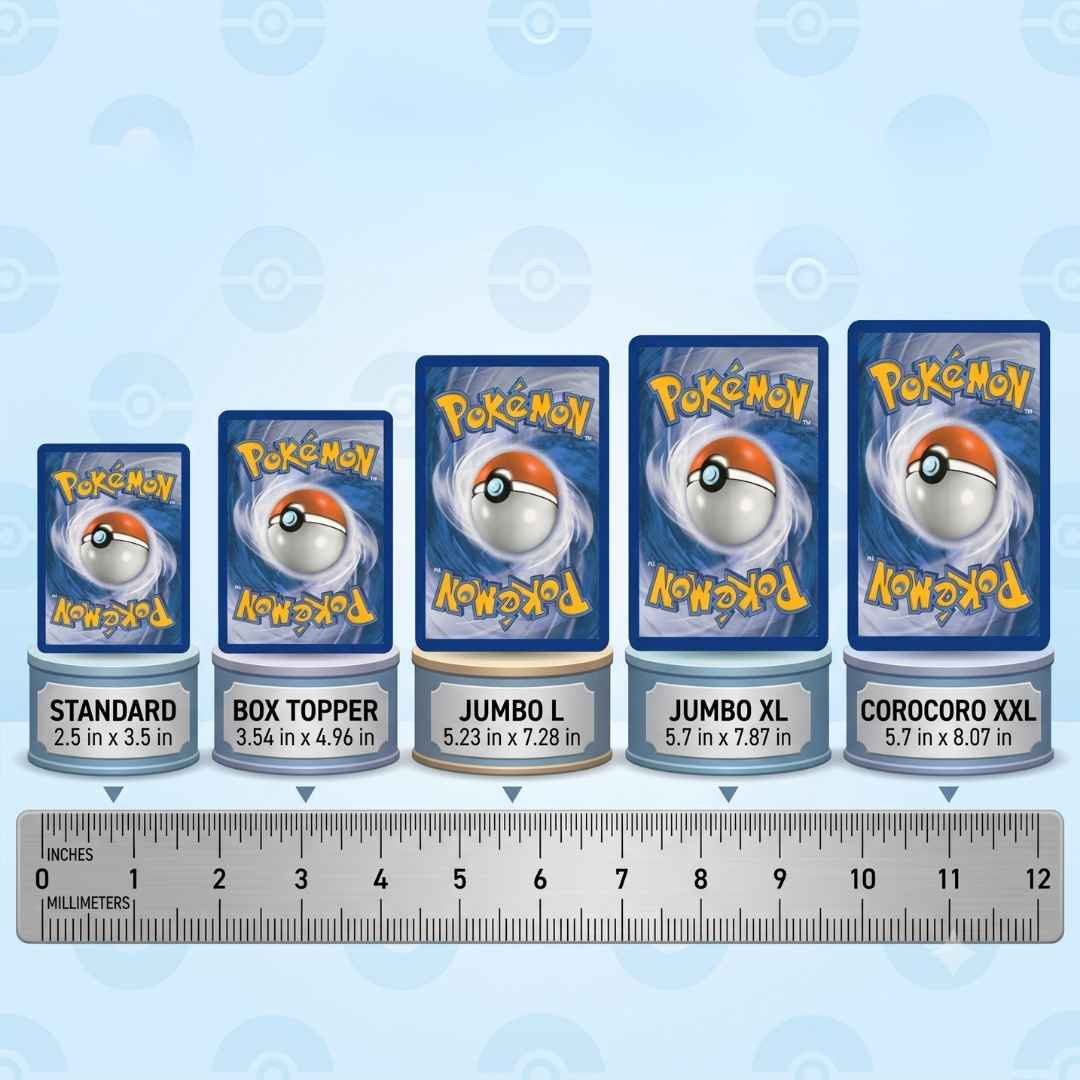
| Card Type | Width (inches) | Height (inches) | Width (mm) | Height (mm) | Details |
| Standard Card | 2.50 in | 3.50 in | 63.5 mm | 88.9 mm | Standard size used across all sets since 1996 |
| Box Topper | 3.54 in | 4.96 in | 90 mm | 126 mm | Commonly included as box inserts in modern sets |
| Jumbo L | 5.23 in | 7.28 in | 133 mm | 185 mm | Premium jumbo format released internationally |
| Jumbo XL, Pre-2019 | 5.70 in | 7.87 in | 145 mm | 200 mm | Used for older retail promotional cards |
| Jumbo, Pre-2020 | 6.00 in | 8.00 in | 152.4 mm | 203.2 mm | Associated with the WotC era and some modern releases |
| Jumbo, Post-2020 | 5.37 in | 7.37 in | 136.5 mm | 187.3 mm | Redesigned to fit newer jumbo card binders |
| CoroCoro XXL | 5.70 in | 8.07 in | 145 mm | 205 mm | Extra-large card format released exclusively in Japan |
| Topps Mega Chrome | 3.14 in | 5.91 in | 80 mm | 150 mm | Special insert size found only in Topps tins |
Not every Jumbo cards guide is correct because the Pokémon Company changed size standards in 2020. If you compare Pre-2020 and Post-2020 versions, you will notice different card dimensions even though both are considered oversized cards.
The older Jumbo format has an exact size of 6 by 8 inches, while the newer version measures 5.37 by 7.37 inches. From my experience, many collectors rely on outdated guides, which often leads to confusion when identifying the correct Pokémon card dimensions for their collection.
Before buying sleeves or buying binders, always check the era first. The correct size ensures compatibility with oversized cards, sleeves, binders, and other card storage products, helping protect your collection.
How Big Is a Pokémon Card? Easy Visual Size Comparisons
Numbers tell you the exact size, but real-life comparisons make it much easier to picture. Here’s how the size of a standard Pokémon card compares with familiar everyday objects you already recognize.
A Standard Credit Card
A credit card is a near-perfect reference for a Pokémon card. Place each card side by side and hold them for a quick visual comparison. A credit card measures 3.37 inches long and 2.125 inches wide, while a Pokémon card is 3.5 inches tall and 2.5 inches wide, making it slightly larger.
The Pokémon card barely extends past the credit card, with a width difference of only 0.375 inches, about the width of a pencil eraser. Since most people carry a card in their wallet, it works as a handy reference object for measurement, helping you picture the real-life size and height using a familiar object.
A US Dollar Bill
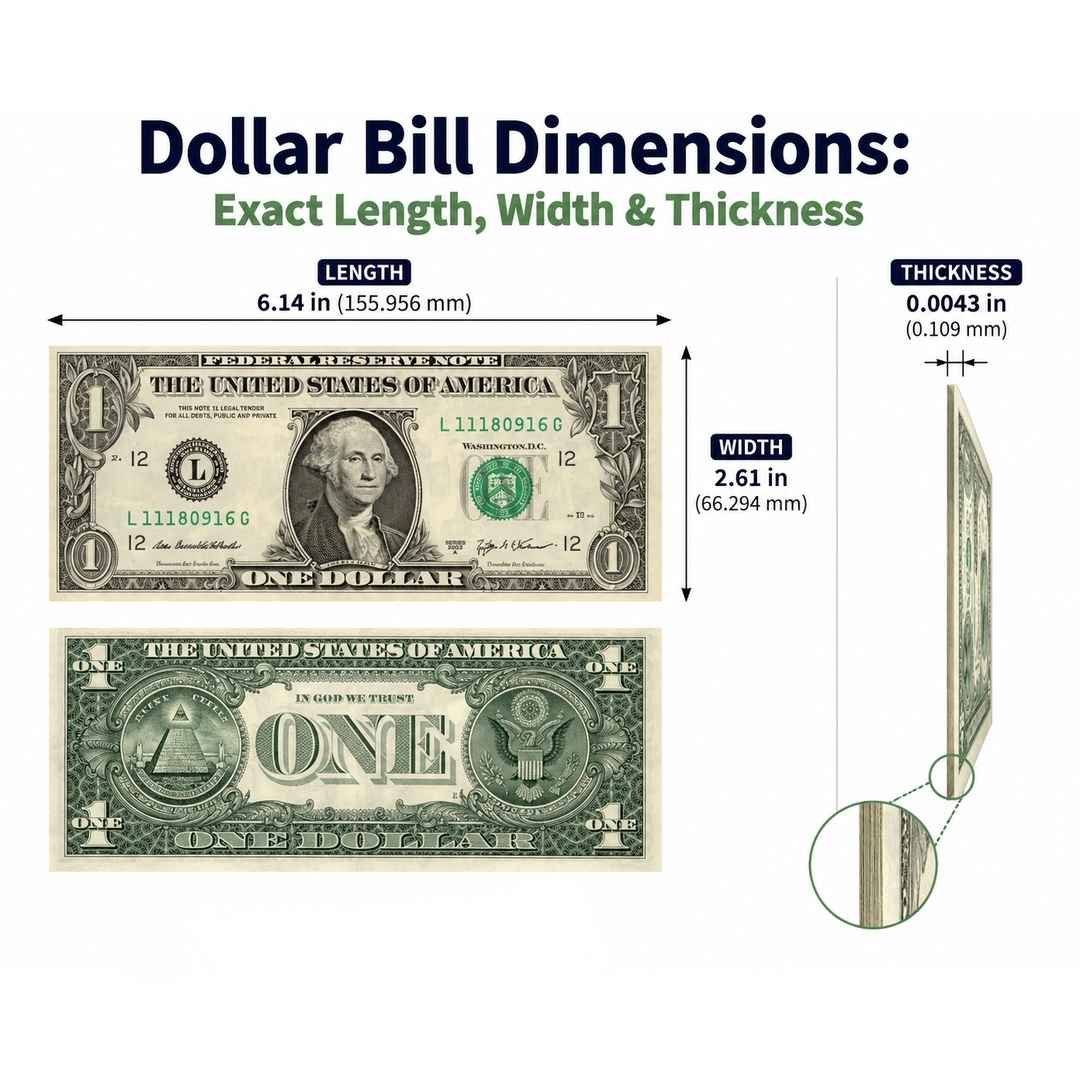
If you are trying to imagine the exact size of a Pokémon card or Pokemon card without having one nearby, a Dollar bill offers a genuinely useful comparison. A Dollar bill measures 6.14 inches long and 2.61 inches wide. Fold the folded bill in half the short way, and it becomes a rectangle measuring about 3.07 inches tall and 2.61 inches wide.
This rectangle is almost the same size as a card, although it is a hair shorter and slightly wider. I often use this visual comparison because it makes the measurement easier to understand and helps you picture the real size much faster than numbers alone.
A Standard Smartphone
Place a Pokémon card beside a typical phone for a quick visual comparison. Modern smartphones are between 2.8 inches and 3.1 inches wide, while the card is 2.5 inches wide, making it noticeably narrower. This simple measurement helps you immediately understand its real-life size, length, and overall size.
In height, the card measures 3.5 inches, making it shorter than a phone screen. Viewed side by side, it feels compact, manageable, designed for your hand, and easy to use as a handheld reference in the modern.
Japanese vs. International Pokémon Card Size Comparison
Many collectors still believe the persistent rumor that Japanese Pokémon cards are smaller than international ones, but that is incorrect.
Authentic Pokémon TCG cards in both English and international prints are identical and exactly measure 63.5 mm by 88.9 mm.
In my experience, I have compared cards from both regions side by side, and they are the same size, which means the same sleeves, binders, and toploaders work perfectly for every card without any difference in fit.
The confusion usually comes from Japanese card games like Yu-Gi-Oh! and Cardfight Vanguard, which use a 59 mm by 86 mm format instead of the standard Pokémon size. Those games require different sleeves, often sold as Japanese-size sleeves measuring around 62 mm by 89 mm.
If you try forcing a standard Pokémon card into the wrong sleeve, it won’t fit properly and may cause damage, warp the cardstock, or even permanently affect the card if you do not remove it immediately.
Pokémon Card Size Guide for Sleeves and Storage
Choosing the correct sleeve size is one of the most practical uses of these card measurements.
Types of Card Sleeves by Size
| Sleeve Type | Internal Width | Internal Height | Best For |
| Standard Outer Sleeve | 66–67 mm | 91–92 mm | Single-sleeve protection during play |
| Perfect-Fit Inner Sleeve | 64 mm | 89 mm | Double sleeving and long-term storage |
| Japanese-Size Sleeve (Avoid) | 62 mm | 89 mm | Designed for Yu-Gi-Oh! cards, not Pokémon cards |
| Jumbo Outer Sleeve | 127 mm | 178 mm | Oversized Pokémon cards and WotC-era jumbo cards |
Standard outer sleeves, also called outer sleeves or a standard sleeve, measure 66 by 91 mm (66 mm × 91 mm) and leave a 1.5 mm buffer on each side of the card. This gap is intentional, preventing the corners from catching the sleeve seam during insertion while making sleeving easier.
For extra protection, perfect fit sleeves (perfect fit) measure 64mm by 89 mm and sit against the card surface as the inner layer. The combination of a perfect fit inside a standard outer sleeve creates a near air-tight air-tight barrier that protects your Pokémon card from dust and moisture, making double sleeving the preferred choice for valuable cards.
Pokémon Cards vs. Other Popular Trading Cards
| Card Game | Width (in) | Height (in) | Width (mm) | Height (mm) | Same Sleeves as Pokémon? |
| Pokémon TCG | 2.5 in | 3.5 in | 63.5 mm | 88.9 mm | Yes |
| Magic: The Gathering | 2.5 in | 3.5 in | 63.0 mm | 88.0 mm | Yes |
| Yu-Gi-Oh! | 2.35 in | 3.38 in | 59.0 mm | 86.0 mm | No |
| Standard Playing Cards | 2.5 in | 3.5 in | 63.5 mm | 88.9 mm | Yes |
| Baseball Cards (US) | 2.5 in | 3.5 in | 63.5 mm | 88.9 mm | Yes |
| Bridge Playing Cards | 2.25 in | 3.5 in | 57.15 mm | 88.9 mm | No |
How to Identify Fake Pokémon Cards by Their Dimensions
The good news is that authentic cards have tight manufacturing tolerances, while counterfeit cards are everywhere. Fakes almost always fail basic measurement checks, making dimensions a quick way to verify a card.
Width and Height
Authentic cards measure 63.5 mm wide and 88.9 tall, with a manufacturing tolerance of ±0.2 to ±0.3 mm, which keeps every genuine card consistent for collecting and gameplay.
Even a small difference becomes immediately visible when you place a fake card next to a real one in a deck. Many counterfeit cards are 62 mm or 65 mm wide, so the incorrect size quickly sticks out, making it much easier to spot before adding it to your collection.
Weight
One of the most reliable checks for spotting fake cards is to weigh them with a precision scale. Authentic and standard cards usually weigh between 1.70 grams and 1.80 grams. Cards that are lighter around 1.50 grams to 1.62 grams are often missing the graphite core.
while cards that are heavier, weighing 1.95 grams or more, may use dense plastic to simulate weight instead of the correct materials. Comparing these measurements is a quick and effective way to identify cards that do not match the expected standards.
Corner Radius
When checking fake cards, I always pay close attention to the corner radius before anything else because it is one of the easiest details to inspect. Real cards have a clean, uniform 0.125-inch corner radius, giving every edge a smooth and consistent finish.
In comparison, fake cards often show jagged, uneven, or overly rounded corners caused by cheap cutting equipment. This difference is usually visible to the naked eye under decent lighting, making the corners a quick and reliable way to judge whether a Pokémon card looks professionally made or poorly produced.
Common Protection Mistakes
- Using card sleeves that are too loose for a secure fit
- Placing unsleeved cards directly into rigid holders
- Storing valuable cards without proper rigid protection
- Stacking protected cards without organizing them correctly
Why Pokémon Card Dimensions Are Important
Knowing the exact dimensions of a Pokémon card makes it easier to select protection products that fit correctly. Many collectors ignore the size, but doing so can lead to sleeves that are too loose or storage solutions that do not properly support the card.
From my experience, spending a few moments checking measurements before buying supplies saves both money and frustration.
Using sized accessories helps reduce movement, improve structural stability, help keep cards cleaner over time, and maintain their condition for long-term collecting and grading.
Once you know the exact measurements, choosing compatible supplies becomes much simpler, giving every card the protection it deserves.
Conclusion
Understanding Pokémon card dimensions and the exact card dimensions of A standard Pokémon card makes the hobby easier for collectors. The exact size and standard size are 2.5 inches wide by 3.5 inches tall, and a genuine card usually weighs 1.70 grams to 1.80 grams. This knowledge helps with buying, checking authenticity, choosing the right card size, and building a reliable protection system using sleeve, sleeves, toploaders, binders, and storage boxes for proper protection, correct fit, fitting, proper sizing, less card movement, stronger structural support, better support, and keeping a Pokémon card collection in better condition over time.
The same valuable knowledge also improves real-world use cases like digital work, digital design, design, artwork, printing, and creating a card template. A setup of 750 pixels × 1050 pixels at 300 DPI is the baseline, while 825 pixels × 1125 pixels adds bleed. In Procreate, use 2.75 inches × 3.75 inches with the correct pixels, DPI, measurements, width, and height to build, choose, and keep accurate designs.
The next time you pick one up, you’ll instantly recognize its exact size.
FAQs
Are Pokémon cards 35PT or 55pt?
Standard Pokémon cards are 35pt (points) thick, and this size accommodates an unwrapped card perfectly. The same card can also be placed inside a standard soft penny sleeve, providing a proper fit for storage and protection without extra space or movement.
Is a Pokémon card 3.5 inches?
Yes,Standard Pokémon cards are 3.5 inches in height and 2.5 inches in width.
What is the standard size of a TCG card?
Most Trading Card Games (TCG), including Pokémon, Magic: The Gathering, and sports cards, follow a standard size of 2.5 × 3.5 inches (63.5 × 88.9 millimeters). These standard cards are usually made from cardstock with a thickness of 0.3 mm to 0.35 mm and have rounded corners with a radius of 3.5 mm for better durability and handling.